KrishiLink
An agricultural marketplace connecting farmers directly to buyers.
Role
Full-stack Developer
Duration
3 weeks
Year
2024
MERN
Full stack
Real-time
Communication
The Problem
Farmers often sell their crops through a chain of intermediaries - each one taking a margin, each one adding distance between the person who grew the food and the person who buys it.
The result: farmers receive a fraction of the market price. Buyers pay more than they should. The intermediary captures the value that should belong to both sides.
KrishiLink was built to remove that middle layer.
What I Built
A MERN stack agricultural marketplace that connects farmers and buyers directly. Farmers list their crops. Buyers browse, filter, and purchase. No intermediary, no margin extraction.
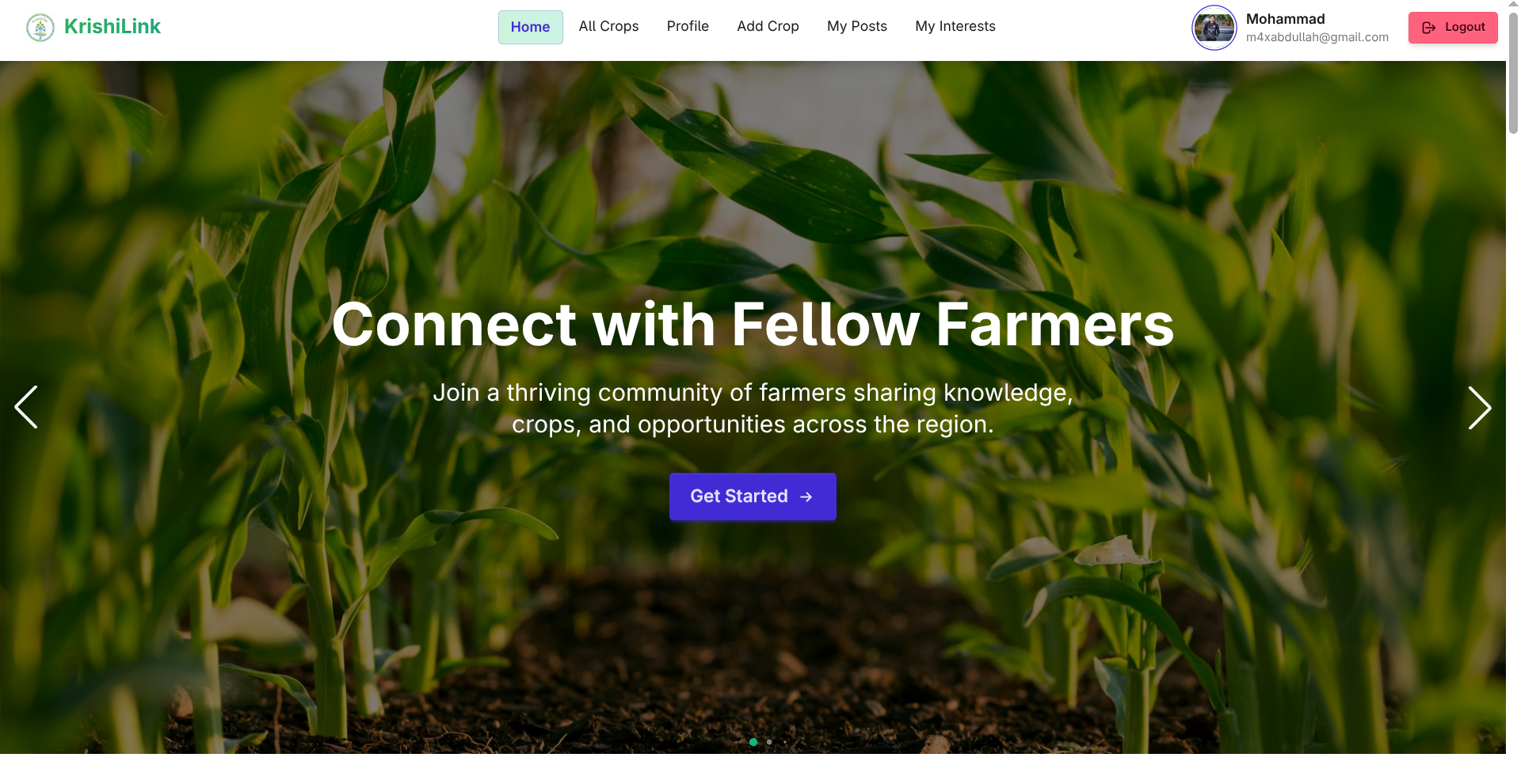
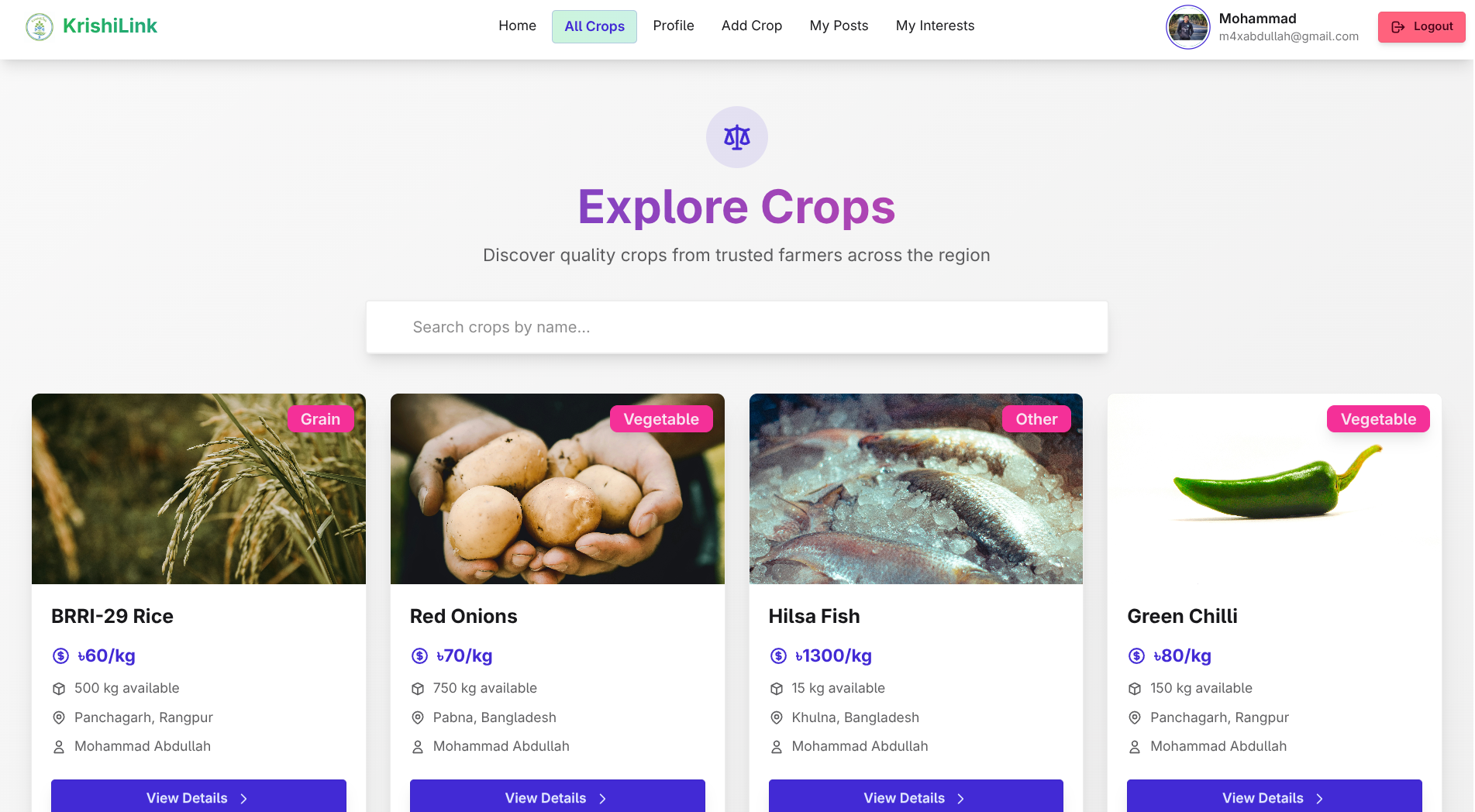
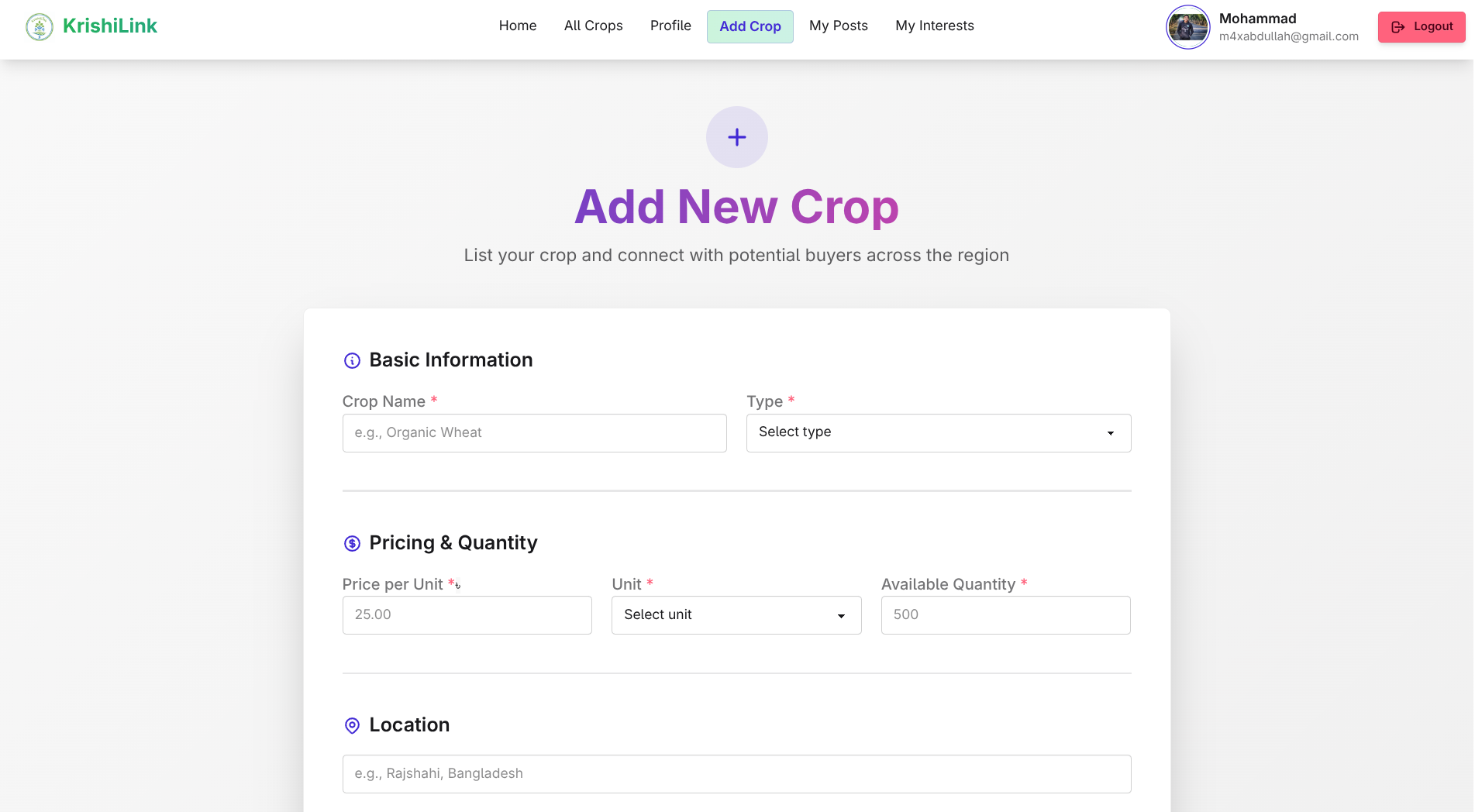
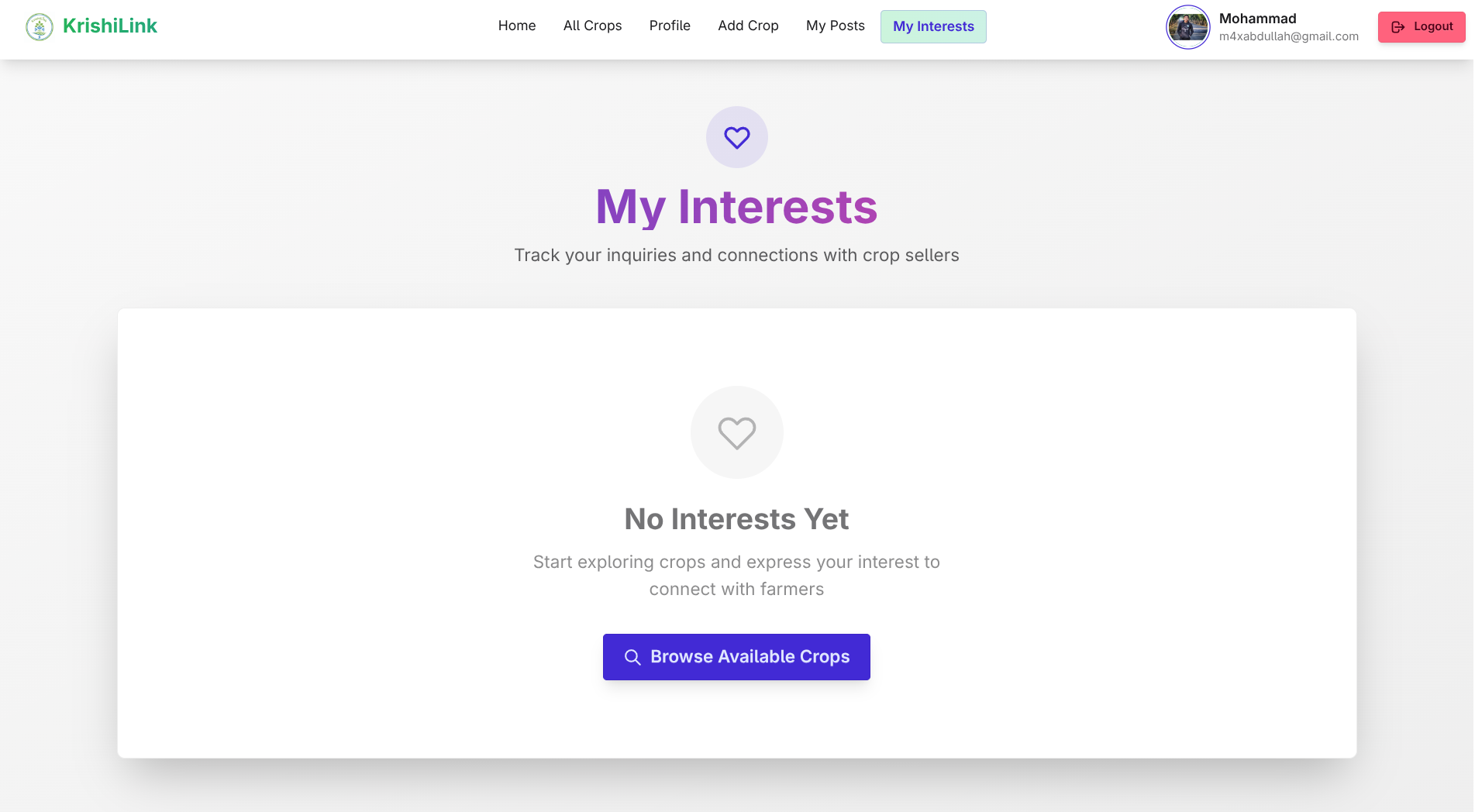
Marketplace with category filtering
A full product catalogue - crops organised by category, filterable by type, searchable by name. Buyers find exactly what they need. Farmers control how their produce is presented.
Role-specific flows
Two distinct user types - Farmers and Buyers - each with their own dashboard and permissions. Farmers manage their listings, track orders, and update availability. Buyers browse, purchase, and track their orders.
Authentication and security
Firebase Authentication handles identity - fast, reliable, zero-maintenance. Role-specific flows activate on login. Every protected route checks the user's role before rendering.
Responsive UI
Built with Tailwind CSS and a scalable component architecture. The marketplace works on any screen - farmers listing from a phone in the field, buyers ordering from a desktop.
Key Decisions
MERN stack for speed of development. MongoDB handles the flexible product catalogue cleanly. Express and Node.js provide a fast REST API. React on the frontend with a component architecture that scales.
Firebase for auth. In a marketplace context, reliable authentication is non-negotiable. Firebase handles it without maintenance overhead.
The Result
KrishiLink demonstrates full MERN stack capability applied to a real social and economic problem. The direct-trade model it enables has genuine impact potential at scale - connecting agricultural producers to markets without friction or intermediary cost.